
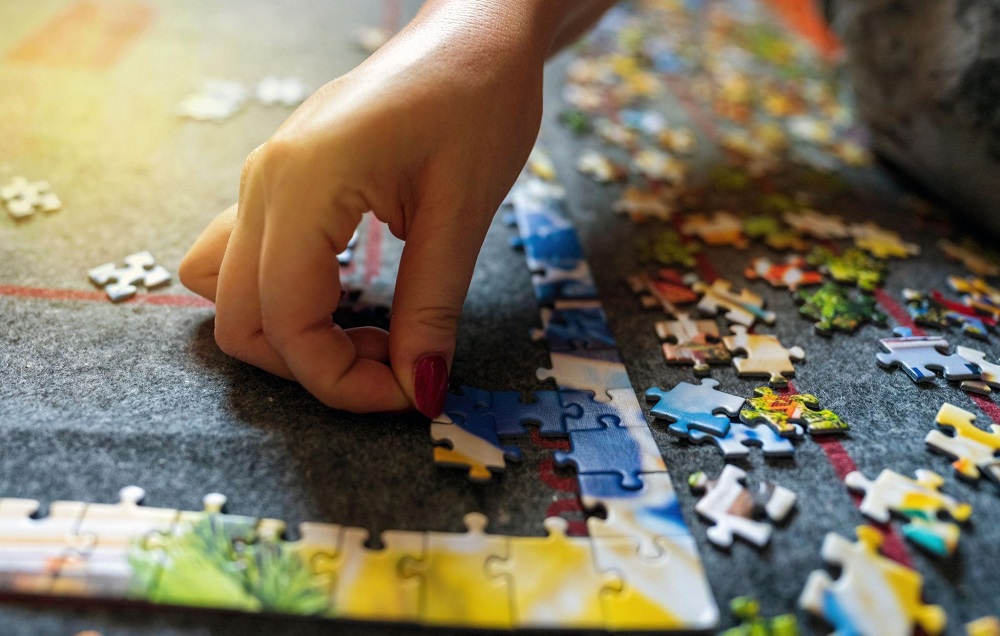
Puzzle activities have remained popular for generations because they challenge the mind in meaningful and enjoyable ways. Whether someone solves a crossword in the morning, completes a jigsaw puzzle with family members, or works through a digital logic challenge on a tablet, puzzles provide structured opportunities to strengthen concentration and reasoning skills. They support learning across age groups and offer both entertainment and cognitive benefits.
Unlike passive forms of recreation, puzzles require active participation. Each challenge encourages observation, memory use, pattern recognition, and decision making. Over time, consistent puzzle solving improves mental flexibility and supports long term brain health.
What a Puzzle Is
A puzzle is a structured challenge designed to test reasoning, logic, observation, or problem solving ability. Puzzles may involve words, numbers, images, shapes, or sequences that require careful thinking to complete.
Common puzzle formats include:
- Word based puzzles such as crosswords
- Number based challenges such as sudoku
- Image assembly activities such as jigsaw puzzles
- Mechanical puzzles involving moving parts
- Logic based reasoning problems
Each type supports different cognitive skills while encouraging persistence and creativity.
Puzzles are flexible enough to be enjoyed individually or in group settings.
Why Puzzle Activities Remain Popular Across Generations
Puzzle solving appeals to people of all ages because it combines challenge with satisfaction. Completing a puzzle provides a clear sense of achievement that motivates continued participation.
Several factors explain their long lasting popularity:
- Accessible difficulty levels for beginners and experts
- Wide variety of puzzle types available
- Opportunities for solo or group participation
- Strong educational value for children and adults
- Compatibility with both printed and digital formats
Because puzzles adapt easily to different skill levels, they remain relevant across changing generations.
They also support lifelong learning habits through regular mental engagement.
Cognitive Benefits of Solving Puzzles
Puzzle solving strengthens multiple thinking skills that support everyday tasks and academic performance.
Important cognitive benefits include:
Improved memory performance
Remembering clues and patterns helps strengthen short term and long term recall abilities.
Stronger concentration
Focused attention during puzzle solving increases the ability to manage complex tasks.
Enhanced logical reasoning
Evaluating possible solutions encourages structured thinking.
Better visual recognition skills
Image based puzzles improve the ability to identify shapes and spatial relationships.
These benefits make puzzles valuable tools for maintaining mental sharpness.
Regular participation supports long term brain activity and flexibility.
Types of Puzzles That Support Mental Development
Different puzzle types challenge the brain in different ways. Exploring multiple formats creates balanced cognitive growth.
Word Puzzles
Word puzzles improve vocabulary knowledge and language awareness.
Examples include:
- Crossword challenges
- Word search grids
- Anagram rearrangement activities
- Letter pattern decoding problems
These puzzles strengthen spelling accuracy and reading comprehension.
They also support language learning in both children and adults.
Number Puzzles
Number puzzles focus on logical relationships and structured reasoning.
Common examples include:
- Sudoku grids
- Magic square challenges
- Arithmetic sequence puzzles
- Pattern recognition number tasks
Number puzzles improve analytical thinking and numerical confidence.
They are especially useful for strengthening structured problem solving habits.
Jigsaw Puzzles
Jigsaw puzzles require players to assemble image fragments into complete pictures.
Benefits include:
- Improved spatial awareness
- Enhanced visual processing speed
- Increased patience during complex tasks
- Stronger pattern recognition ability
Completing large image puzzles also encourages teamwork when solved collaboratively.
Mechanical and Physical Puzzles
Mechanical puzzles involve moving components or arranging objects into correct positions.
Examples include:
- Sliding tile puzzles
- Interlocking shape challenges
- Rotating cube style puzzles
- Wooden assembly puzzles
These activities strengthen hand eye coordination and spatial reasoning.
Physical puzzle solving also supports fine motor skill development.
Educational Value of Puzzle Activities for Children
Puzzle solving plays an important role in childhood learning environments. Teachers often include puzzle based activities in classrooms because they support both academic and personal development.
Educational benefits for children include:
- Improved reading comprehension through word puzzles
- Stronger number recognition through logic puzzles
- Increased patience during problem solving tasks
- Better ability to follow structured instructions
- Greater confidence when completing challenges independently
Puzzle activities also encourage curiosity and persistence during learning experiences.
Children who solve puzzles regularly often develop stronger analytical thinking habits.
Puzzle Activities and Mental Health Benefits
Puzzle solving supports emotional wellbeing by providing structured and calming challenges.
Mental health benefits include:
- Reduced stress through focused activity
- Improved mood after completing tasks
- Increased confidence from achieving goals
- Greater sense of relaxation during quiet problem solving sessions
Many people use puzzles as part of daily routines to maintain balance between work and recreation.
These activities provide productive alternatives to passive screen time.
Consistent participation supports long term mental stability.
Digital Puzzle Games in Modern Learning Environments
Digital technology has expanded access to puzzle activities through mobile devices and computers. Players can now explore hundreds of puzzle variations without physical materials.
Advantages of digital puzzle platforms include:
- Immediate feedback during problem solving
- Adjustable difficulty levels for different users
- Portable access through smartphones and tablets
- Interactive visual design supporting engagement
Digital puzzles maintain the same cognitive benefits as traditional formats while increasing accessibility.
They also support independent learning environments outside classrooms.
Puzzle Solving as a Family Activity
Families often use puzzle solving as a shared activity that encourages cooperation and communication.
Group puzzle sessions provide several advantages:
- Strengthened relationships through teamwork
- Shared decision making during challenges
- Opportunities for conversation during relaxed activities
- Positive learning environments for children
Collaborative puzzle solving also encourages patience and respect between participants.
Family puzzle sessions create meaningful shared experiences.
Strategies for Solving Puzzles More Effectively
Successful puzzle solving depends on observation, patience, and structured thinking.
Helpful strategies include:
- Studying instructions carefully before beginning
- Identifying repeating patterns early
- Working from known information toward unknown areas
- Breaking large problems into smaller sections
- Reviewing progress regularly during solving sessions
Applying these techniques improves accuracy and efficiency.
Practice strengthens problem solving confidence over time.
Puzzle Activities for Adults and Lifelong Learning
Adults benefit from puzzle solving just as much as younger participants. Regular mental challenges support cognitive activity throughout life.
Benefits for adults include:
- Maintaining memory strength
- Supporting concentration during work tasks
- Encouraging structured thinking habits
- Providing relaxing recreational activity after busy schedules
Many adults include puzzles in daily routines to maintain mental clarity.
Lifelong learning habits often include consistent puzzle solving participation.
These activities support intellectual curiosity at every stage of life.
The Role of Puzzles in Building Persistence and Patience
Puzzle solving requires sustained attention and repeated attempts. This process strengthens persistence and encourages disciplined thinking.
Participants learn to:
- Approach challenges gradually
- Accept mistakes as learning opportunities
- Continue working despite difficulty
- Recognize progress through small achievements
These habits support academic success and professional problem solving ability.
Persistence developed through puzzle solving transfers into many areas of daily life.
Regular practice strengthens confidence when facing complex challenges.
How to Choose the Right Puzzle for Different Skill Levels
Selecting appropriate puzzle difficulty helps maintain motivation and enjoyment.
Important selection factors include:
- Age and experience level
- Available time for solving
- Preferred puzzle format
- Individual learning goals
- Interest in visual or language based challenges
Choosing suitable puzzles increases satisfaction and encourages continued participation.
Gradually increasing difficulty supports steady improvement.
Balanced challenge levels prevent frustration and boredom.
The Future of Puzzle Activities in Education and Recreation
Puzzle activities continue evolving through new technologies and learning methods. Interactive learning platforms now combine traditional puzzle concepts with digital innovation.
Future developments may include:
- Adaptive puzzle difficulty systems
- Expanded collaborative online puzzle environments
- Integration with classroom learning tools
- Improved accessibility for different age groups
These improvements will continue supporting puzzle solving as both an educational resource and recreational activity.
Puzzle based learning environments remain valuable tools for strengthening thinking skills across generations.
FAQ Section
What age is best for starting puzzle activities
Children can begin simple puzzles as early as preschool age using shape matching or picture assembly challenges.
How often should people solve puzzles for cognitive benefits
Regular short sessions several times each week provide noticeable improvements in concentration and memory.
Are puzzles helpful for improving vocabulary skills
Yes. Word puzzles strengthen spelling accuracy and increase familiarity with new vocabulary.
Do puzzles support teamwork skills in group settings
Yes. Collaborative puzzle solving encourages communication and shared decision making.
Can puzzles help improve focus during school activities
Yes. Regular puzzle practice strengthens attention control and task persistence.
Are digital puzzles as effective as printed puzzles
Yes. Digital puzzle platforms provide similar cognitive benefits while offering adjustable difficulty levels.
What is the difference between logic puzzles and visual puzzles
Logic puzzles focus on reasoning and structured thinking, while visual puzzles emphasize pattern recognition and spatial awareness.
